§ TECHNICAL SHEET · RESEARCH
The CJC-1295 literature, read as engineering spec.
Seventeen primary citations spanning 1990-2025. Rat pituitary pharmacology, the Phase 1 dose-escalation, the cryo-EM structure, the halted Phase 2 program, and the analytical chassis.
What the published record actually says
The CJC-1295 evidence base is unusually compact for a compound with this much downstream interest. Almost everything in the published human pharmacology traces back to a single 2006 Phase 1 study of 22 healthy adults and two follow-up substudies drawn from the same cohort. Those studies documented how long the compound stays in the bloodstream, how much it raises growth hormone and IGF-1, and whether natural pulsatile secretion persists during continuous exposure — it does.
Beyond that, a structural framework for how the GHRH receptor works (from a 2020 cryo-EM study) explains why the four engineered amino acid substitutions preserve activity while blocking enzyme attack. Recent work on detection methods and a 2025 pharmacology review fill out the picture. There is no large efficacy trial, no long-term safety data, and no approved indication — the clinical development program stopped after a Phase 2 trial in HIV-associated visceral adiposity was discontinued in 2006. The research page documents all of it, cited inline.
01 — Rational design and the rat pituitary characterization
The lineage starts in 2005, in Endocrinology. Jetté et al. published the original characterization of CJC-1295 as a long-acting GHRH analog: hGRF(1-29)-albumin bioconjugates retained full agonism at the rat pituitary GRF receptor, the lead candidate produced a roughly 4-fold increase in GH area-under-curve over two hours versus the unconjugated peptide, and bioactivity persisted beyond 72 hours after a single subcutaneous bolus in rats [1].
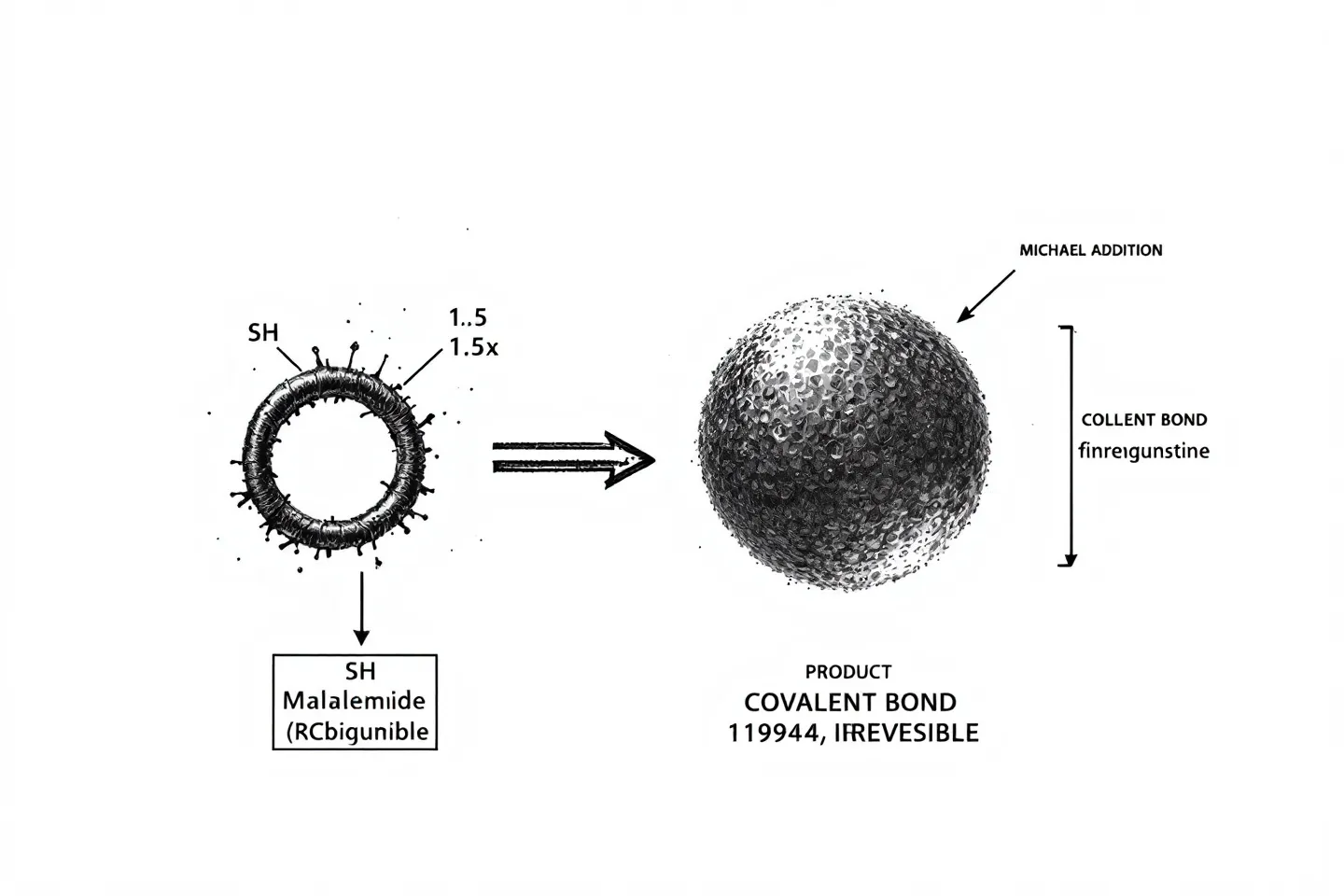
The paper's value is mechanistic rather than therapeutic. It established that the Cys34-maleimide chemistry actually worked in vivo — that covalent capture on circulating serum albumin produced multi-day plasma residence without abolishing receptor activation. Every subsequent CJC-1295 study traces back to this design rationale.
In parallel, the GHRH-knockout mouse rescue study (Alba et al. 2006) showed that daily subcutaneous CJC-1295 at 2 μg per injection (≈80 μg/kg in a 25 g animal) restored linear growth, normalized body weight, and rescued lean body composition over five weeks [4]. Less-frequent dosing (every 48 or 72 hours) yielded only partial restoration and was accompanied by increased somatotroph proliferation and pituitary GH mRNA — a histological finding worth flagging because it suggests the pituitary responds to sub-frequent GHRH input with cellular adaptation, not just transcriptional acceleration.
02 — The Phase 1 cohort and the human pharmacokinetics
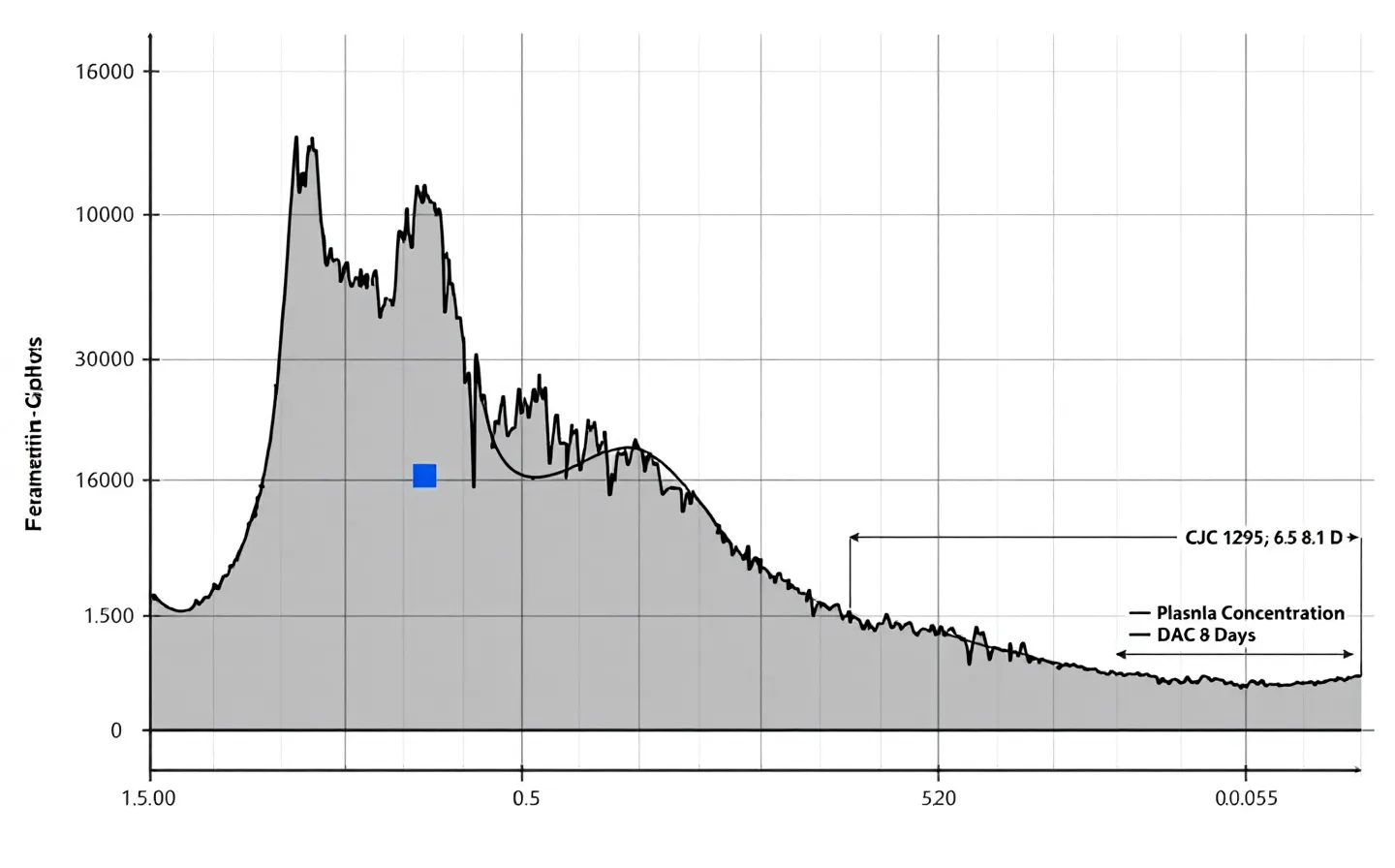
The pivotal human characterization is Teichman et al. 2006, published in the Journal of Clinical Endocrinology & Metabolism [2]. Twenty-two healthy adults aged 21-46 years received single subcutaneous CJC-1295 at 30, 60, 125, or 250 μg/kg, with multi-dose cohorts at weekly or biweekly intervals.
The headline numbers: mean plasma GH rose 2- to 10-fold over baseline and persisted at least 6 days after a single dose. Mean IGF-I rose 1.5- to 3-fold and persisted 9-11 days. Multiple-dose cohorts maintained IGF-1 elevation for up to 28 days after the final dose. Mean plasma half-life ranged from 5.8 to 8.1 days across the dose cohorts.
This is the entire published human PK record. There is no Phase 1B, no broader dose-response, no comparison cohort versus tesamorelin, no extended-duration cohort. Twenty-two healthy young adults sampled once, with follow-up substudies on biomarkers and pulsatility, is the full human PK dossier. The Phase 2 program that was supposed to extend it into a clinical-outcomes population terminated before its endpoints reported.
03 — Pulsatility preservation
A reasonable a priori concern with a multi-day GHRH agonist is that continuous receptor activation might abolish the natural pulsatile pattern of GH release — collapsing a discrete-pulse system into a flat plateau. Ionescu and Frohman addressed this directly in a 2006 substudy [3].
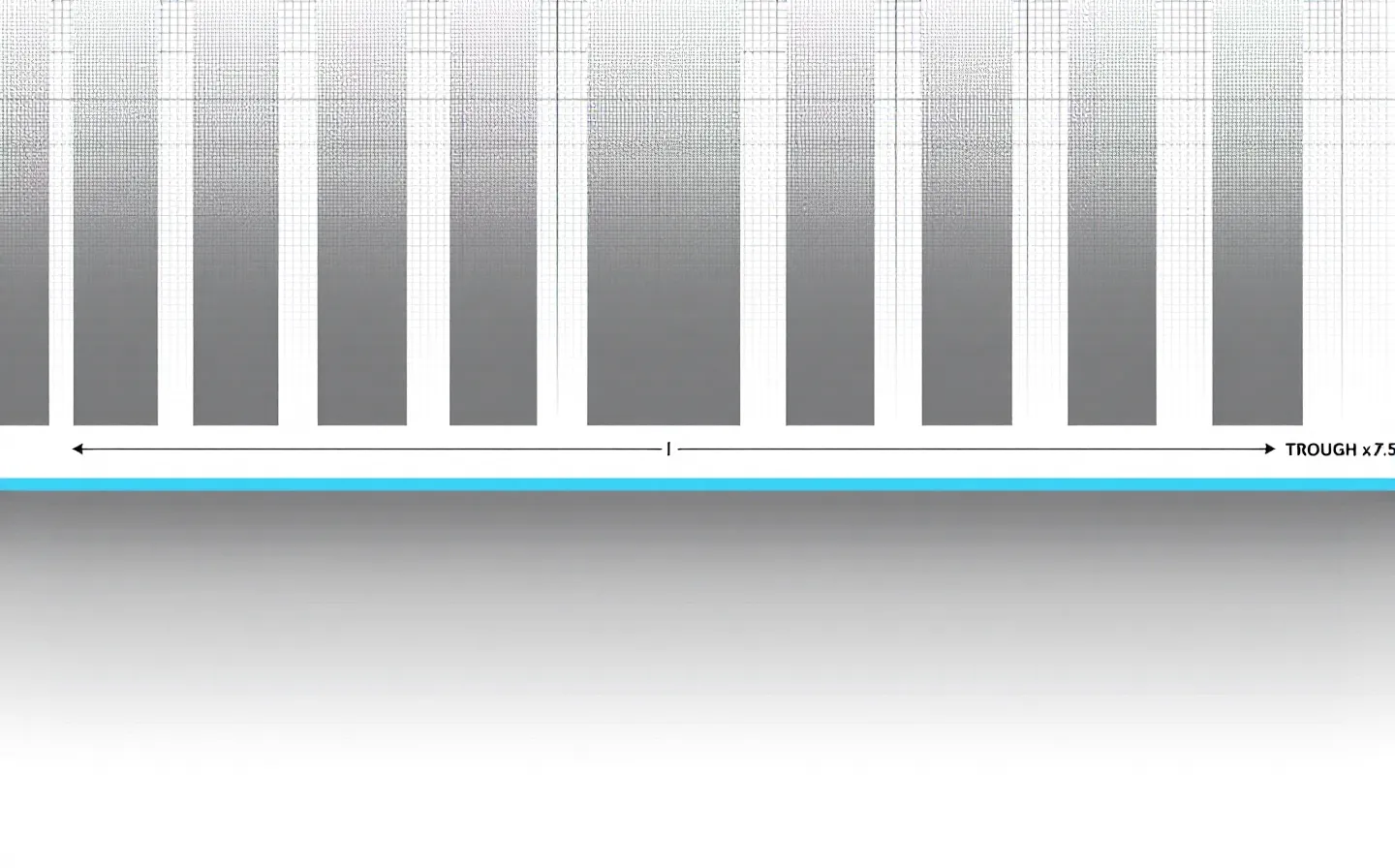
The finding: pulsatile secretion persisted during continuous CJC-1295 exposure. Trough GH rose approximately 7.5-fold; pulse architecture — pulse number, amplitude variability, inter-pulse interval — remained intact; mean GH rose 46% above baseline. The picture is a raised floor with the discrete pulses still firing on top of it, structurally distinct from the steady tonic output that exogenous recombinant GH administration produces.
The mechanism is consistent with what later reviews would frame as the GHRH-class signature: IGF-1 negative feedback at the hypothalamus continues to constrain peak amplitude even when the GHRH input is sustained, so the GH axis self-regulates upward rather than overshooting [14]. Whether the same pulsatility preservation holds across weeks of chronic dosing in a clinical population is not in the published record.
04 — The structural framework
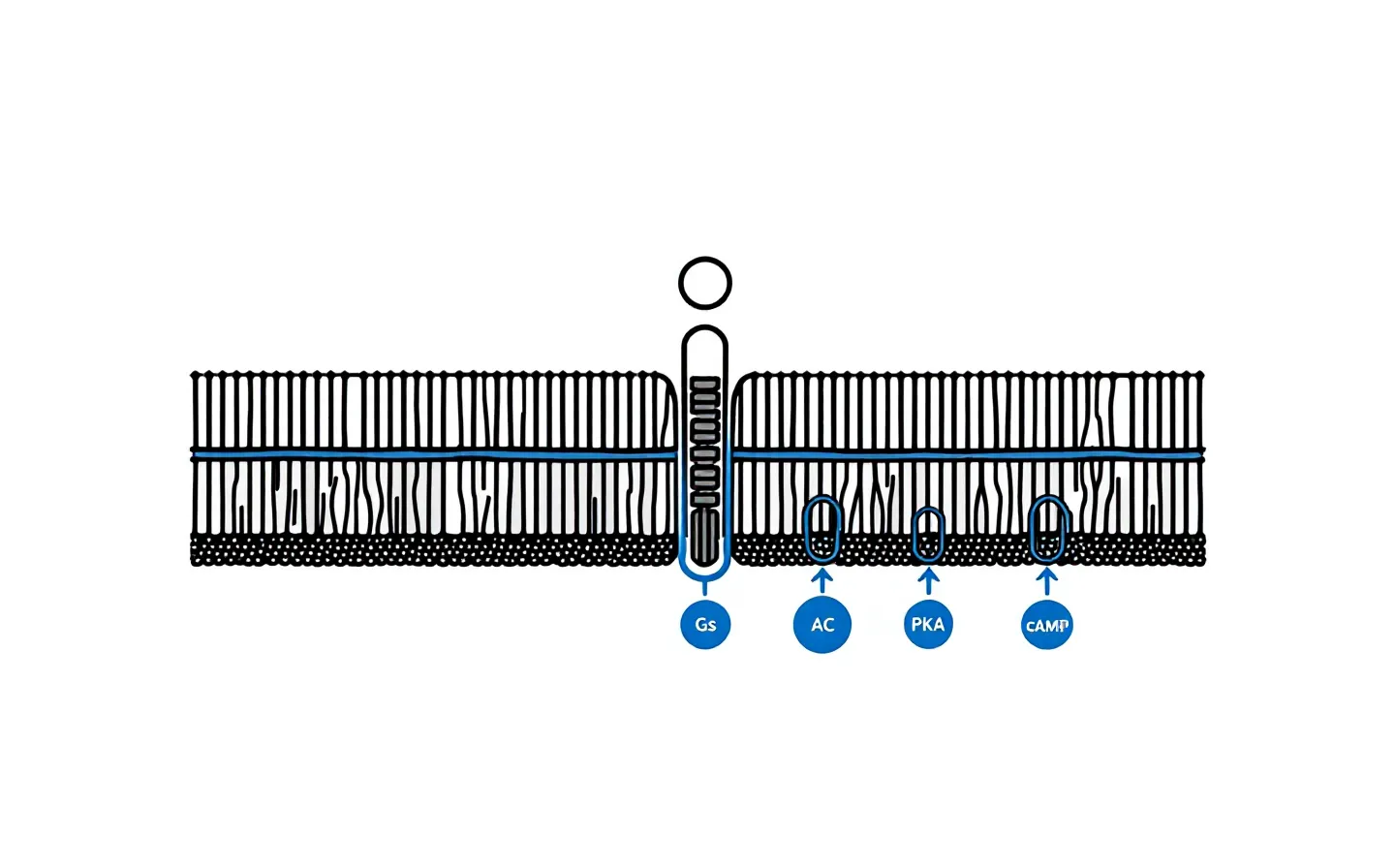
Zhou et al. 2020 in Nature Communications published the cryo-electron microscopy structure of human GHRHR bound to GHRH and the heterotrimeric Gs protein at 2.6 Å resolution (PDB 7CZ5) [5]. The structural picture: GHRH adopts a continuous α-helix engaging all three extracellular loops, the receptor extracellular domain, and every transmembrane helix except TM4.
The paper closes a long-standing gap in the rational-design rationale for CJC-1295. Each of the four protective residue substitutions — D-Ala-2, Gln-8, Ala-15, Leu-27 — can now be mapped against the binding interface. None of the modified residues sits at a critical receptor-contact position; they all sit in proteolysis-prone solvent-exposed regions of the helix. The original 2005 design decisions, made by Jetté et al. on the basis of empirical receptor-binding assays and protease-resistance screens, are confirmed at atomic resolution.
For the broader GHRH-analog development question — what other substitutions might be productive, where the design space narrows — the cryo-EM model is the framework subsequent work will refer to. CJC-1295 specifically is not the focus of the paper, but the model explains why CJC-1295 binds and signals the way it does.
05 — The halted Phase 2
The clinical-development arc ends in October 2006. ConjuChem Biotechnologies had enrolled 192 participants in a randomized double-blind placebo-controlled Phase 2 study of CJC-1295 in HIV-associated visceral adiposity (NCT00267527), weekly subcutaneous dosing [8]. A participant died from an acute coronary event approximately two hours after the 11th weekly dose. The trial was terminated. Independent review attributed the event to pre-existing undiagnosed coronary artery disease and judged it unrelated to study drug. Primary efficacy endpoints were never published in peer review, and sponsor-funded clinical development has not resumed.
The candid framing is that the cardiovascular safety profile of long-term GHRH-axis stimulation in older or higher-risk populations remains effectively uncharacterized — not because of a positive safety signal in the truncated data, but because the published evidence base never reached the volume that would have ruled one out. The class-comparator benchmark is tesamorelin, which has produced 15-20% reduction in visceral adipose tissue over 26 weeks at 2 mg SC daily in HIV-associated lipodystrophy [11] and significant cognitive improvement in older adults at 1 mg SC daily over 20 weeks [9]. Whether CJC-1295 would have produced comparable effects is a counterfactual.
The class-level mechanistic argument advanced in Smith and Thorner's 2023 invited review — that GHRHR activation in older adults retains endogenous IGF-1 negative-feedback regulation, a structural distinction from exogenous recombinant GH [14] — is the strongest recent academic framing of how CJC-1295's pharmacology relates to the somatopause research question. The empirical clinical evidence base to test the argument with CJC-1295 specifically does not exist.
06 — The analytical and regulatory chassis
The post-2006 record is dominated by analytical chemistry and regulatory action. Memdouh et al. 2021 in Drug Testing and Analysis characterized 19 major in vitro metabolites of sermorelin, tesamorelin, CJC-1295, and CJC-1295 DAC, and validated an LC-MS/MS detection method at limits at or below 1 ng/mL in urine [12]. The paper closed a long-standing gap that had allowed GHRH analogs to evade routine anti-doping screens despite documented illicit use. Thomas et al. 2024 in the Journal of Mass Spectrometry extended this with a nano-LC quadrupole/Orbitrap method validated to WADA technical performance standards [15], formalizing the analytical pipeline for routine S2 enforcement.
Forensic identification of seized illicit material was confirmed earlier — Henninge et al. 2010 reported high-resolution LC-MS/MS sequence determination of an unidentified peptide preparation seized by an anti-doping laboratory, characterized as CJC-1295 [13]. The substance has circulated in the gray market continuously since.
The FDA page current as of April 22, 2026 identifies CJC-1295 as a former 503A Category 2 substance whose nomination was withdrawn; its entry in the withdrawal table continues to carry the agency's safety warnings [16]. The October 29, 2024 FDA Pharmacy Compounding Advisory Committee meeting documented the existing pharmacology, clinical, and post-marketing literature on CJC-1295 in the assembled briefing record. The WADA 2025 Prohibited List reaffirms CJC-1295 under Section S2 [17]. Removal from a 'do not compound' list, in this regulatory architecture, is not approval; the substance remains unapproved for human use and outside legitimate compounding-pharmacy practice.