§ TECHNICAL SHEET · QUESTIONS
Twelve questions, answered from the published record.
Mechanism, the DAC variant distinction, pulsatility, the halted Phase 2 program, the FDA 503A action, the WADA prohibition. Cited inline.
Q01. What does the research literature show about how CJC-1295 actually works?
CJC-1295 is an agonist at the growth hormone-releasing hormone receptor (GHRHR), a class B G-protein-coupled receptor expressed on anterior pituitary somatotrophs [1]. Receptor engagement triggers a Gs / adenylyl cyclase / cAMP / PKA signaling cascade that drives GH gene transcription and pulsatile GH release; downstream hepatic IGF-1 production amplifies the signal. The 2020 cryo-EM structure of GHRHR-GHRH-Gs (PDB 7CZ5, 2.6 Å resolution) showed that GHRH binds as a continuous α-helix engaging all three extracellular loops and the transmembrane core, providing the structural framework that explains why the four CJC-1295 amino acid substitutions preserve receptor binding while resisting peptidase attack [5]. The DAC modification's covalent tether to serum albumin Cys34 via Michael addition is the pharmacokinetic mechanism that extends circulating half-life from minutes to days [1].
Q02. What is the difference between CJC-1295 with DAC and modified GRF(1-29) without DAC?
The two molecules share the same 29-residue GHRH backbone with the same four protective amino acid substitutions (D-Ala-2, Gln-8, Ala-15, Leu-27). The difference is a single chemical addition: the DAC variant carries a 30th residue with a maleimidopropionic acid group that undergoes a Michael addition with the free thiol of cysteine-34 on circulating serum albumin, producing a covalent peptide-albumin bioconjugate roughly 70 kDa in apparent mass [1]. The pharmacokinetic consequence is large: the DAC variant has a plasma half-life of 5.8-8.1 days [2], while the non-DAC modified GRF(1-29) sits at approximately 30 minutes — itself a roughly 4-fold extension over native GHRH (about 7 minutes) attributable to the four protective substitutions alone. The two molecules are routinely conflated in lay and vendor literature; they are pharmacologically distinct.
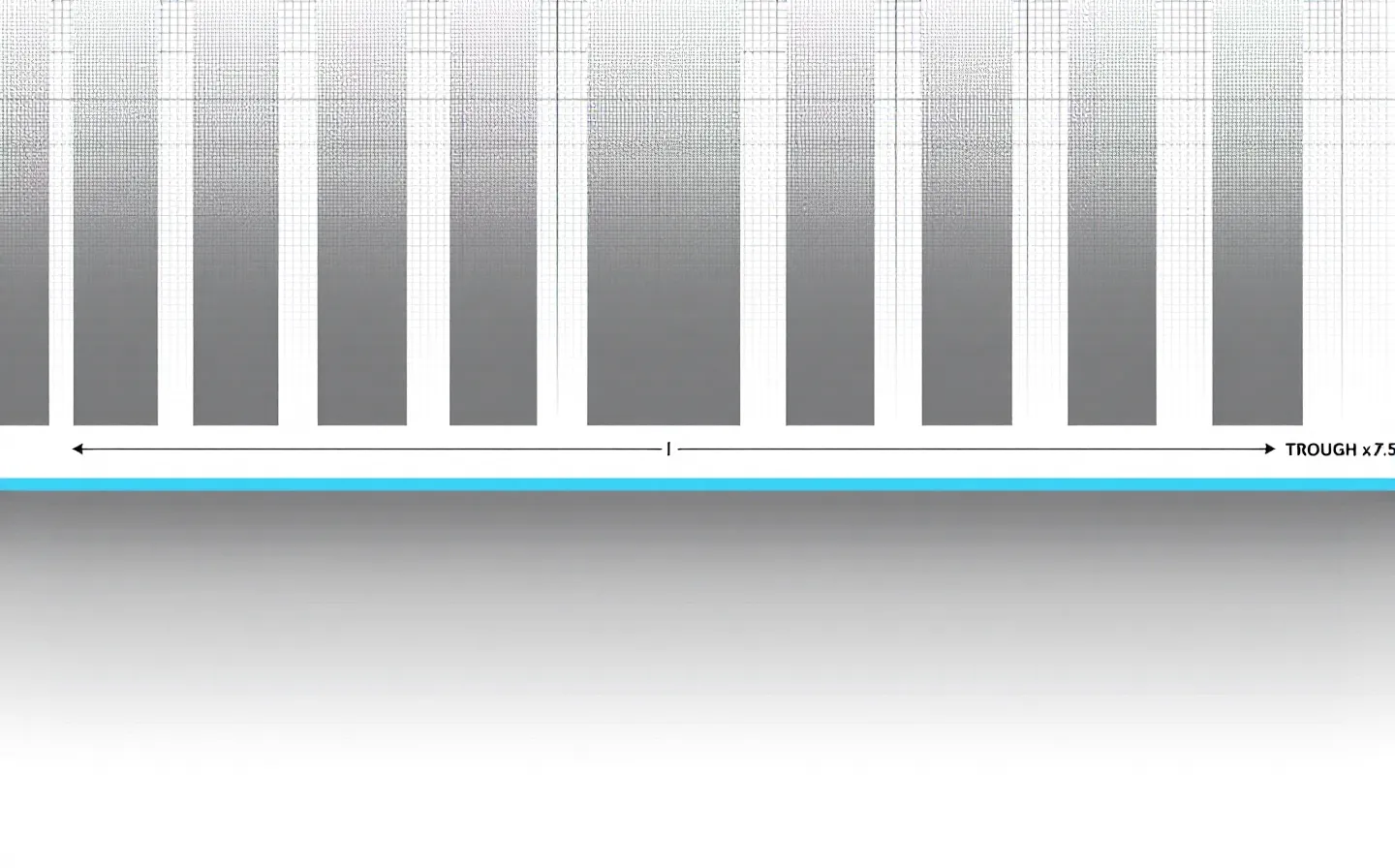
Q03. Does CJC-1295 disrupt normal pulsatile growth hormone release?
In the published Phase 1 substudy data, no. Ionescu and Frohman (2006) showed that pulsatile GH secretion persisted during continuous CJC-1295 exposure in healthy adults: trough GH rose approximately 7.5-fold, mean GH rose 46% above baseline, and the discrete pulse architecture — pulse number, amplitude variability, inter-pulse interval — remained intact [3]. The picture is a raised baseline floor with the natural pulses still firing on top, structurally distinct from the flat tonic output that exogenous recombinant GH produces. The mechanism is consistent with IGF-1 negative feedback at the hypothalamus continuing to regulate peak amplitude even when GHRH input is sustained [14]. Whether the same pulsatility preservation holds across months or years of chronic dosing in a clinical population is not in the published record.
Q04. What is the published half-life of CJC-1295 in humans?
Mean plasma half-life 5.8-8.1 days in healthy adults aged 21-46 across the Phase 1 dose range of 30, 60, 125, and 250 μg/kg single subcutaneous injection (Teichman et al. 2006, n=22) [2]. Mean plasma GH rose 2- to 10-fold over baseline persisting at least 6 days, and mean IGF-I rose 1.5- to 3-fold persisting 9-11 days. Multiple-dose cohorts maintained IGF-1 elevation up to 28 days after the final dose. These numbers refer to the DAC variant. The non-DAC modified GRF(1-29) sits at approximately 30 minutes — about two orders of magnitude shorter.
Q05. What happened to the CJC-1295 clinical trial program?
Sponsor-funded clinical development halted in October 2006. A Phase 2 randomized double-blind placebo-controlled trial of CJC-1295 in HIV-associated visceral adiposity (NCT00267527, n=192) on weekly subcutaneous dosing was terminated after a participant died from an acute coronary event approximately two hours after the 11th weekly dose [8]. The independent review attributed the event to pre-existing undiagnosed coronary artery disease and judged it unrelated to study drug, but primary efficacy endpoints were never published in peer review and no sponsor-funded clinical development has resumed. The candid framing is that the cardiovascular safety profile of long-term GHRH-axis stimulation in older or higher-risk populations remains effectively uncharacterized — not because of a positive safety signal in the truncated data, but because the published evidence base never reached the volume that would have ruled one out.
Q06. How does CJC-1295 compare to tesamorelin and sermorelin pharmacologically?
All three are GHRH-receptor agonists. Sermorelin is the unmodified GRF(1-29) backbone with a plasma half-life on the order of minutes; tesamorelin is an N-terminally modified GHRH analog with a half-life on the order of an hour; CJC-1295 DAC, with its covalent albumin tether, sits at multi-day plasma residence [1] [2]. Tesamorelin is FDA-approved for HIV-associated lipodystrophy at 2 mg subcutaneous daily and has published 15-20% reductions in visceral adipose tissue over 26 weeks of dosing [11]. Tesamorelin also has a randomized trial in older adults showing significant executive-function improvement (P=0.005), 117% IGF-1 elevation, and 7.4% body fat reduction at 1 mg SC daily over 20 weeks (the SMART study, n=152) [9]. The CJC-1295 Phase 2 program was originally designed against the tesamorelin visceral-fat benchmark; whether it would have hit it remains untested.
Q07. What does the cognitive-aging research on GHRH analogs show?
The strongest class-level evidence is the Baker et al. 2012 randomized trial of tesamorelin (NCT00257712, the SMART study) in 152 community-dwelling adults aged 55-87, including 66 with amnestic mild cognitive impairment [9]. Twenty weeks of daily 1 mg subcutaneous tesamorelin produced significant improvement on executive function (P=0.005), a positive trend on verbal memory (P=0.08), 117% IGF-1 elevation, and 7.4% body fat reduction. This is the strongest class-level signal that pituitary GHRH-axis activation can yield measurable cognitive effects in older adults. The Smith and Thorner 2023 invited review of growth hormone secretagogues frames the mechanism as plausible because GHRHR activation in older adults retains endogenous IGF-1 negative-feedback regulation, distinguishing it from exogenous recombinant GH [14]. CJC-1295 itself has no published cognitive-aging trial.
Q08. Why is CJC-1295 paired with ipamorelin in research protocols?
The mechanistic rationale traces to Bowers et al. 1990 in the Journal of Clinical Endocrinology & Metabolism: combined intravenous administration of GHRH (1 μg/kg) and GHRP-6 (1 μg/kg) in healthy humans produced a GH peak several-fold higher than either peptide given alone [7]. The two peptides activate distinct receptor systems — GHRH at GHRHR on somatotrophs, GHRP at the ghrelin receptor GHS-R1a — and the synergy is supra-additive at the GH peak. The modern CJC-1295 + ipamorelin pairing applies this empirical finding to a long-acting GHRH analog and a selective ghrelin receptor agonist. GHRP-2, GHRP-6, and hexarelin were earlier-generation ghrelin agonists with broader off-target activity (transient cortisol and prolactin elevations); ipamorelin is more selective. MK-677 (ibutamoren) is the orally bioavailable non-peptide analog of the ghrelin pathway.
Q09. What is CJC-1295's current FDA regulatory status?
Not approved for any human therapeutic indication. The FDA page marked current as of April 22, 2026 lists CJC-1295 alongside AOD-9604, ipamorelin acetate, thymosin alpha-1, and Selank acetate among withdrawn 503A nominations for patient-specific pharmacies, with FDA's safety concerns retained beside their entries [16]. Ipamorelin acetate also remains in Category 2 under the 503B policy for outsourcing facilities, where its entry is dated September 29, 2023. The action unwound the September 2023 'do not compound' designation that had been in place for roughly a year. CJC-1295 remains unapproved for human use and is not on the 503A Bulks List; FDA has published no rule on the substance, leaving pharmacies without an agency ruling on what the nomination's withdrawal means for compounding it. The October 29, 2024 FDA Pharmacy Compounding Advisory Committee meeting documented the existing pharmacology, clinical, and post-marketing literature on CJC-1295 in the assembled briefing record.
Q10. Is CJC-1295 banned in sport under WADA?
Yes. CJC-1295 is prohibited at all times — in-competition and out-of-competition — under Section S2 (Peptide Hormones, Growth Factors, Related Substances, and Mimetics) of the World Anti-Doping Code 2025 Prohibited List, alongside other GHRH analogs and GH secretagogues [17]. Detection in any sample collected from a tested athlete constitutes an Anti-Doping Rule Violation. The analytical chassis is recent: Memdouh et al. 2021 characterized 19 in vitro metabolites of CJC-1295 and validated an LC-MS/MS detection method at limits at or below 1 ng/mL in urine [12], and Thomas et al. 2024 validated a nano-LC quadrupole/Orbitrap method to WADA technical performance standards [15]. Routine detection at standard doping-control concentrations is now in place.
Q11. What were the doses used in the published human studies?
Phase 1 single-dose cohorts: 30, 60, 125, and 250 μg/kg single subcutaneous injection (Teichman et al. 2006, n=22 healthy adults aged 21-46) [2]. Multi-dose cohorts in the same study: weekly or biweekly subcutaneous injections over 28-49 days. The proteomic substudy used 11 healthy young men sampled one week after a single subcutaneous injection [6]. The pulsatility substudy used a single subcutaneous dose from the same cohort [3]. The Phase 2 HIV-lipodystrophy program (NCT00267527, n=192) used weekly subcutaneous dosing but the specific μg/kg schedule was never fully disclosed in peer review due to the October 2006 trial termination [8]. No subsequent human dose-finding study has been published. There is no FDA-labeled, EMA-labeled, or otherwise-regulated human therapeutic dose for CJC-1295.
Q12. Are there long-term human safety data on CJC-1295?
No. The published human safety record consists of the Phase 1 cohorts and substudies (Teichman 2006, Ionescu & Frohman 2006, Sackmann-Sala 2009) [2] [3] [6] — total exposure measured in single doses and short multi-dose windows in fewer than 30 healthy young adults — plus the truncated Phase 2 record (NCT00267527, terminated in October 2006 after a single participant fatality judged unrelated to study drug) [8]. No long-duration randomized controlled trial of CJC-1295 has been published. The theoretical safety concern most consistently flagged in the endocrinology literature is sustained supraphysiological IGF-1 elevation — implications for insulin resistance, edema, carpal tunnel symptoms, joint discomfort, and theoretical mitogenic risk in pre-existing neoplasia are extrapolated from recombinant-GH exposure data, not directly characterized for CJC-1295.