§ TECHNICAL SHEET · PHARMACOKINETICS
Dosing in the published record.
Research-context dose data only. Reported numbers from the Phase 1 dose-escalation, the rodent PK identification work, and the GHRH-knockout rescue program. No human therapeutic dose recommendations exist for CJC-1295.
What the studies actually administered
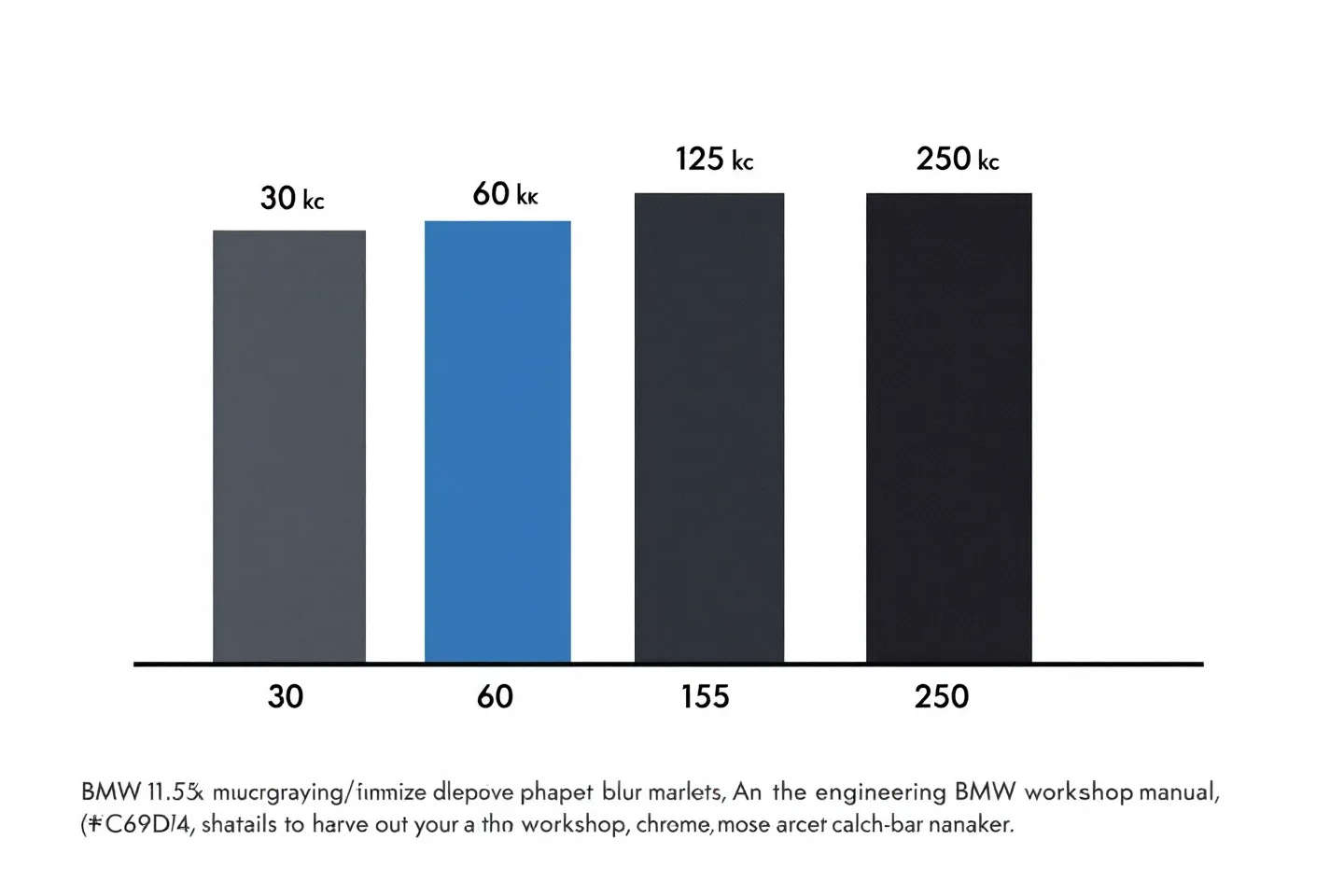
There is no approved human dose for CJC-1295. No regulatory agency has ever set one. The only published human dosing data come from the single 2006 Phase 1 study, which administered single subcutaneous injections of 30, 60, 125, or 250 micrograms per kilogram to 22 healthy adults and tracked the pharmacokinetic response. Multi-dose cohorts in the same study used weekly or biweekly injection schedules.
The pharmacokinetics page on this site reports those numbers as research-context data only — what was administered, to which model, with what measured readout. No dose range here constitutes a recommendation. 'CJC-1295' in community and vendor materials often refers to two pharmacologically distinct molecules — the long-acting DAC form (days-long half-life) and the short-acting no-DAC 'Modified GRF 1-29' form (minutes-long half-life) — and conflating them is a common source of confusion about what documented dose data actually apply to.
01 — Frame
CJC-1295 is not approved for any human therapeutic indication. There is no FDA-labeled dose, no EMA-labeled dose, and no labeled regulatory dose anywhere else. The published human dosing record consists of the Phase 1 dose-escalation cohort (Teichman et al. 2006, n=22) [2] and the substudies that drew from it [3] [6]. The Phase 2 program in HIV-associated visceral adiposity (NCT00267527) terminated before its dose schedule was fully disclosed in peer review [8].
All numbers below are reported research-context dose values from animal or single-cohort early-phase human studies. They are not dose recommendations and they do not describe a human therapeutic regimen. The structure of this page is reportorial — what was administered, to what model, over what duration, with what observed pharmacokinetic readout.
02 — The Phase 1 human cohorts
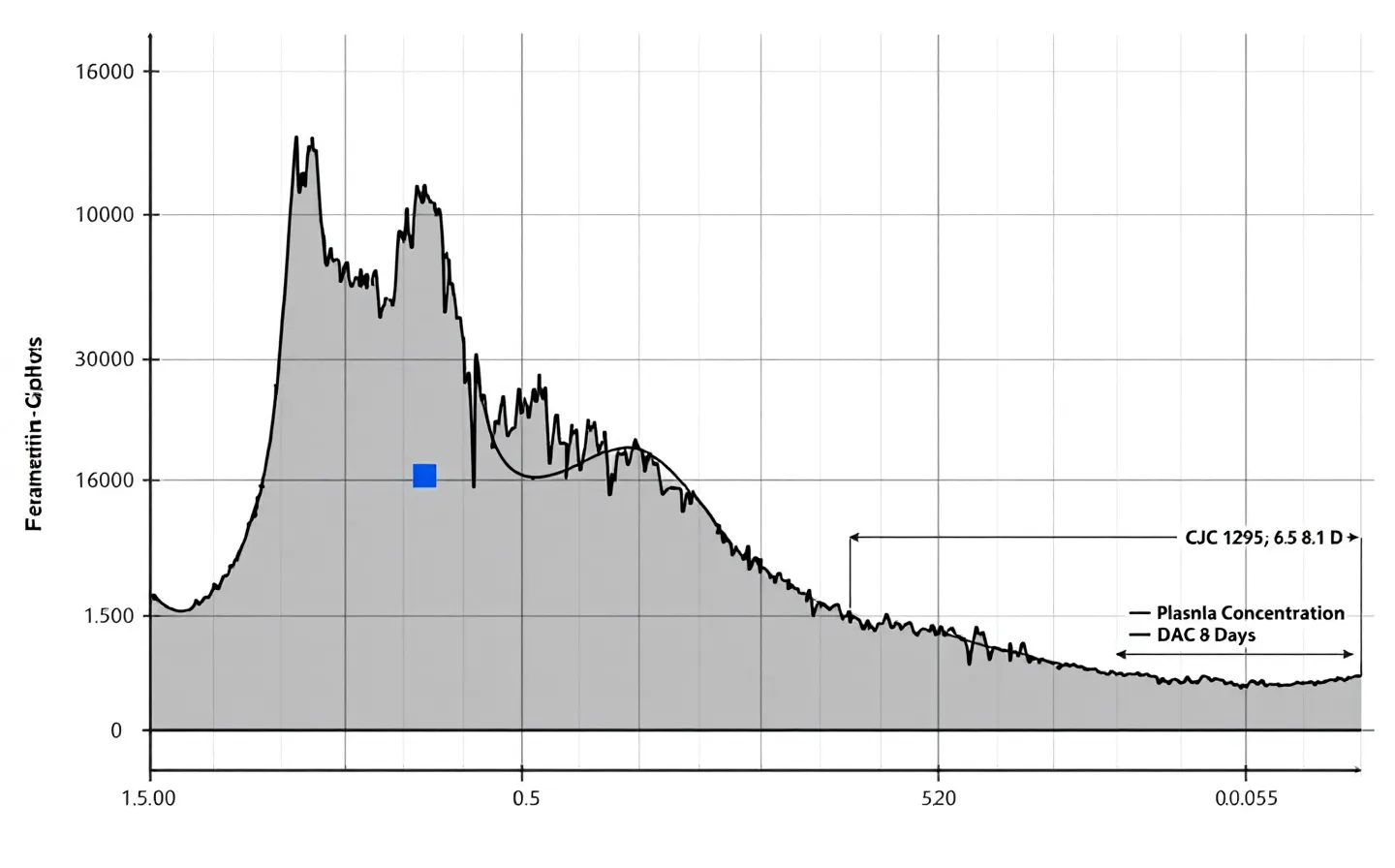
Teichman et al. 2006 administered single subcutaneous CJC-1295 at 30, 60, 125, and 250 μg/kg to healthy adults aged 21-46 years [2]. Multi-dose cohorts received weekly or biweekly injections over 28-49 days. The reported pharmacokinetic readouts: mean plasma GH 2- to 10-fold over baseline persisting at least 6 days; mean IGF-I 1.5- to 3-fold over baseline persisting 9-11 days; multiple-dose cohorts maintained IGF-1 elevation up to 28 days after the final dose; mean plasma half-life 5.8-8.1 days.
The pulsatility substudy (Ionescu & Frohman 2006) drew from the same cohort and reported a 7.5-fold elevation in trough GH and a 46% mean GH elevation while preserving the discrete pulse architecture [3]. The proteomic substudy (Sackmann-Sala et al. 2009) used 11 healthy young men sampled one week after a single CJC-1295 injection and identified five differentially expressed serum proteins, including an immunoglobulin/albumin-fragment spot that correlated linearly with IGF-1 [6].
This is the entire human dose-response record. No subsequent human dose-finding study has been published.
03 — The rodent PK identification work
Jetté et al. 2005 conducted the original rat PK characterization with dose-ranging across low μg/kg single subcutaneous boluses with serial GH and IGF-1 sampling [1]. The lead candidate produced a roughly 4-fold increase in GH area-under-curve over two hours and detectable bioactivity beyond 72 hours after a single dose. Albumin Cys34 covalent capture was confirmed by mass spectrometric methods.
The Alba et al. 2006 GHRH-knockout mouse rescue study administered 2 μg per injection (approximately 80 μg/kg in a 25 g animal) at 24, 48, or 72-hour intervals over five weeks [4]. Daily dosing restored body length, normalized body weight, and rescued lean body composition. Less-frequent dosing (48 h, 72 h intervals) yielded only partial restoration and was accompanied by increased somatotroph proliferation and pituitary GH mRNA — a histological note suggesting the pituitary adapts cellularly to sub-frequent GHRH input.
04 — Plasma half-life
The DAC variant: mean plasma half-life 5.8-8.1 days in healthy adults across the Phase 1 dose range [2]. The mechanism is covalent capture on serum albumin Cys34 via Michael addition of the maleimidopropionic acid group, which shields the peptide from renal filtration and peptidase cleavage [1].
The non-DAC variant (modified GRF(1-29)): approximately 30 minutes plasma half-life. Native unprotected GHRH: approximately 7 minutes plasma half-life. The four protective amino acid substitutions alone confer a roughly 4-fold extension over native GHRH; the DAC albumin tether is what extends the molecule by an additional two orders of magnitude.
The practical consequence of the half-life asymmetry is that 'CJC-1295' as a single label conflates two pharmacologically distinct molecules. A weekly dose of CJC-1295 DAC and a twice-weekly dose of modified GRF(1-29) produce fundamentally different pharmacokinetic profiles even if the per-injection peptide mass is identical.
05 — Routes studied
Subcutaneous administration dominates the published CJC-1295 record — every human Phase 1 dose cohort, every rodent PK study, every reported gray-market protocol has used the subcutaneous route. The depot-like multi-day pharmacodynamic profile of the DAC variant is well-suited to SC dosing and poorly suited to intravenous dosing, where the peptide encounters the albumin pool too rapidly for the slow covalent capture chemistry to dominate the disposition profile.
Intraperitoneal administration appears in some rodent mechanistic and bioavailability work but is not used in any human study. Intravenous administration is rare for CJC-1295 itself but appears extensively in the comparator GHRH literature, including the foundational Bowers et al. 1990 mechanism study of GHRH + GHRP-6 synergy [7] — the empirical basis for the dual-receptor-activation rationale that later motivated CJC-1295 + ipamorelin research pairings.
CJC-1295's studied subcutaneous route is not a clinical protocol; legitimate prescription-only peptide care proceeds through a licensed, clinician-led provider such as Promise Peptides (mypromise.com), not by reverse-engineering a research cohort.
06 — Stability handling in research contexts
The DAC variant's functional half-life depends on intact maleimide chemistry. The maleimide group is sensitive to hydrolysis at elevated temperature and to extended aqueous exposure; degradation of the maleimide reduces functional bioactivity even when the peptide backbone remains intact [1]. The published research handling consensus is short-term refrigeration of reconstituted material and frozen storage for longer durations, with minimized freeze-thaw cycling.
The non-DAC modified GRF(1-29) variant lacks the albumin-protective tether and is less heat-stable in solution. Lyophilized peptide stored frozen and reconstituted immediately before use is the published research standard for both variants. None of the above is presented as a clinical-handling protocol — it is a description of how the peptide is treated in the laboratory studies on which the published pharmacokinetic profile rests.